
Where Ambition Meets Opportunity — The Virtual Career Fair Redefining What’s Possible for Women in STEM
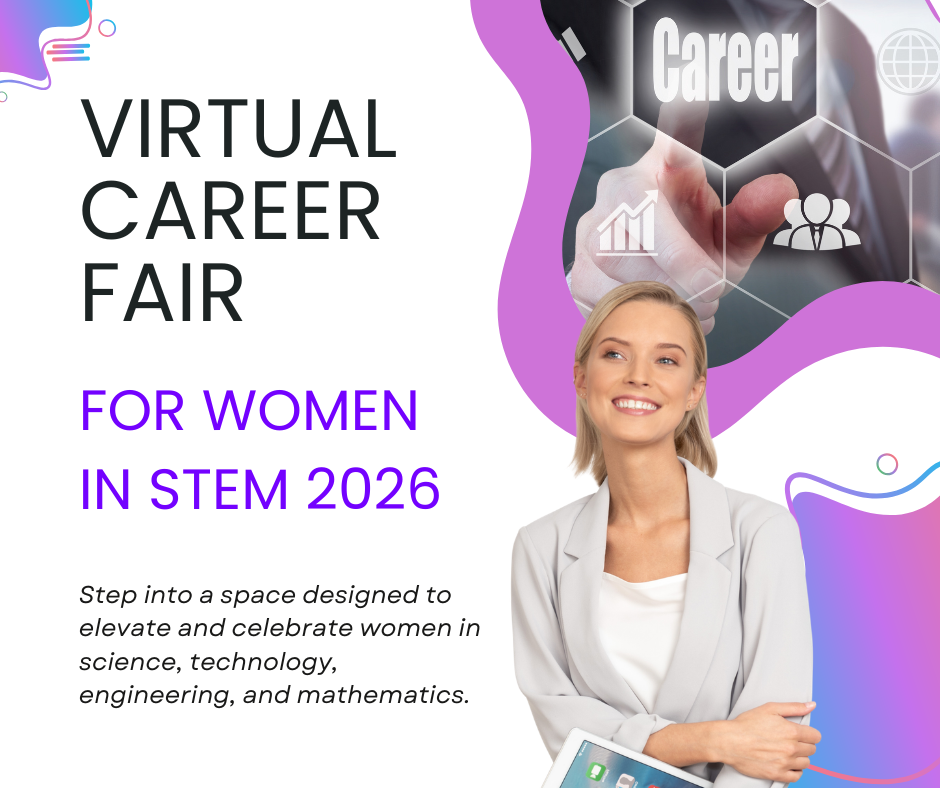
On March 19, 2026, Impactpool is hosting the Virtual Career Fair for Women in STEM, a full-day event running from 9:00 AM to 4:00 PM UTC, bringing together qualified women from across the globe and connecting them with some of the most prestigious international institutions actively seeking technical talent. From the European Central Bank to the European Southern Observatory, the event is structured as a direct bridge between exceptional women and the organizations working to build a more equitable, innovative world. The fair is free to attend, conducted entirely in English, and hosted on the Radancy platform, making it accessible regardless of geography — a deliberate design choice that reflects the event’s core philosophy of removing barriers rather than creating them.
The Virtual Career Fair for Women in STEM is not simply a job board translated into a live format. It is a carefully curated professional experience built to serve women who have already accumulated expertise and are looking to channel that expertise into work that carries global weight. Participation requires a minimum of three years of relevant professional experience and a postgraduate degree, though candidates with a bachelor’s degree and substantial work history are also considered. Fluency in English and a CV submitted through the Impactpool platform are mandatory prerequisites, as each application undergoes an individual validation process to ensure that the organizations represented receive access to a pool of candidates who are genuinely qualified and aligned with their missions. This is a space designed not for first steps, but for decisive leaps, the kind of career moves that shift trajectories and open doors into international institutions where the work done each day touches millions of lives.
Science Without Borders: A Look at the Organizations Shaping the Future
The organizations presenting at this year’s career fair represent a cross-section of global institutional power, and their presence at an event centered on women in STEM is itself a statement.
The morning opens with the Comprehensive Nuclear-Test-Ban Treaty Organization, better known as the CTBTO. This is an institution whose mandate is nothing short of verifying global compliance with nuclear non-testing obligations, a mission that relies almost entirely on precision science, cutting-edge data analysis, and international cooperation. The CTBTO’s session will be led by women currently working within the organization, including Information Security Manager Zvirawa Rutendo, Radionuclide Lead Analyst Pires Carla, and Human Resources representative Olivia Nagery. Attendees will hear firsthand about what it means to work where science and global security intersect, and how careers within the CTBTO span everything from cybersecurity to atmospheric monitoring. The session is structured as a live, interactive discussion rather than a formal presentation, giving participants the rare opportunity to engage directly with professionals whose work operates at the intersection of science and diplomacy.
The European Central Bank follows. With more than 5,000 employees and trainees drawn from across Europe and working out of Frankfurt, Germany, the ECB is one of the most influential financial institutions on the continent and a key pillar of the Eurosystem and the Single Supervisory Mechanism. Talent Acquisition Partners Alexandra Launay and Nicola Corbett will represent the ECB, offering insight into what kinds of profiles the institution seeks and what a career inside one of Europe’s most data-driven environments actually looks like in practice. For women in STEM with backgrounds in economics, data science, financial modeling, or quantitative analysis, the ECB represents a uniquely prestigious and impactful landing point. The institution explicitly states its commitment to diversity and its desire to attract professionals from varied backgrounds, and its presence at this career fair is a concrete expression of that stated value.
Fusion for Energy, the organization responsible for providing Europe’s contribution to ITER, the world’s largest experimental nuclear fusion reactor, is also on the agenda. The ITER project represents one of the most ambitious scientific undertakings in human history, a collaborative effort to demonstrate that fusion energy can be produced on a commercial scale. Women with backgrounds in plasma physics, mechanical engineering, project management, or materials science will find the F4E session particularly relevant, as the organization consistently requires top-tier scientific and technical expertise to advance one of the defining energy challenges of this century.
Leadership, Cybersecurity, and the Stars: Afternoon Sessions That Inspire Action
The afternoon portion of the Virtual Career Fair for Women in STEM moves from institutional career spotlights into territory that is broader in scope and more directly focused on professional empowerment and leadership development.
The midday session, titled “Own Your Impact: How Women in STEM Lead, Influence, and Shape the Future,” is led by Matanat Rahimova, a UN System Specialist and Leadership and Career Coach with a background in helping women navigate the particular dynamics of careers within UN and EU institutions. The session is framed around strategic positioning, specifically, how women can translate deep technical expertise into visible influence within institutional environments that have historically not been designed with their advancement in mind. This is not motivational in the generic sense; it is practical guidance on how to advocate for a seat at tables that matter, how to build internal visibility, and how to move from execution to leadership within complex, multinational structures.
The Organisation for the Prohibition of Chemical Weapons takes the stage next. The OPCW is the implementing body of the Chemical Weapons Convention, a treaty that has seen the verified destruction of over 70,000 metric tons of declared chemical weapons stockpiles. It is an institution at the crossroads of science, international law, and global security, and careers within it are among the most consequential available to technical professionals. The OPCW session will focus specifically on talent acquisition and career pathways, offering a structured overview of how the organization recruits and what types of expertise it seeks most urgently. For women with backgrounds in chemistry, toxicology, verification science, or international relations, this session represents a direct introduction to a field where technical skill has immediate, real-world humanitarian impact. The OPCW’s presence at a women-focused STEM career fair signals not only openness but active pursuit of gender diversity within its workforce.
The European Southern Observatory closes the technical sessions with what may be the most visually and conceptually captivating presentation of the day. ESO operates some of the most advanced telescopes on Earth, and the session will feature four women currently working within the organization: Sara Krauss, Director of Engineering; Amelia Bayo, full astronomer and Project Scientist for the MOONS and 2GDSM projects; Alessandra Carmichael-Martins, an Adaptive Optics Engineer; and Evelina Dietmann from Human Resources. Together, they will offer a behind-the-scenes look at what it takes to build and operate the instruments that expand humanity’s understanding of the universe, and how women are leading that work at every level.
The final session of the day, “Women Shaping Cyber,” features Carla Zibreira, a Lynx Sentry professional and ambassador for Portugal’s National Girls in STEM Program. The session examines how women are reshaping the cybersecurity landscape through diverse perspectives, strategic leadership, and technical innovation, and how closing representation gaps in this sector is directly tied to building stronger, more resilient digital infrastructures globally.
How to Make the Most of This Opportunity
Preparation is what separates attendance from impact, and the Impactpool team has laid out a clear framework for how participants can approach the day with intention.
The first step is registration. Prospective participants must update their Impactpool profile and submit a CV in English before the event. Each application is individually reviewed and validated, and those who qualify receive confirmation along with access details. The event has limited capacity, so early registration is strongly advisable. Applicants should treat the profile and CV submission not as a formality but as a first impression, because for the HR professionals reviewing applications, it effectively is one.
Once registered, preparing thoughtful questions is essential. Each session is structured to include live Q&A in a group chat format during the presentations, followed by access to virtual booths where one-on-one conversations with HR representatives become possible. These individual conversations are among the most valuable elements of the entire fair. Unlike the group sessions, the booth interactions allow for personalized exchanges, questions about relocation, specific roles, team culture, or the realities of hardship postings are all entirely appropriate. Impactpool recommends reviewing available positions beforehand and having a clear sense of which aspects of a role or organization are most relevant to a particular professional profile.
The event is accessible to persons with disabilities, a detail that speaks to the organizers’ genuine commitment to inclusivity rather than a performative one. Technical issues, if they arise, can be addressed by refreshing or switching browsers, and direct support is available at vcfsupport@impactpool.org. The entire event is conducted in English and is free of charge, reinforcing that the only barrier to participation is eligibility, and for women with STEM backgrounds and international career ambitions, the eligibility criteria are built to find exactly that profile.
The Virtual Career Fair for Women in STEM takes place at a moment when the conversation around gender equity in science and technology has moved from theoretical to operational. International institutions are not simply expressing commitments to diversity in annual reports, they are showing up at career fairs, activating their HR teams, and making deliberate efforts to connect with qualified women who might otherwise never find their way into an organization’s hiring pipeline.