
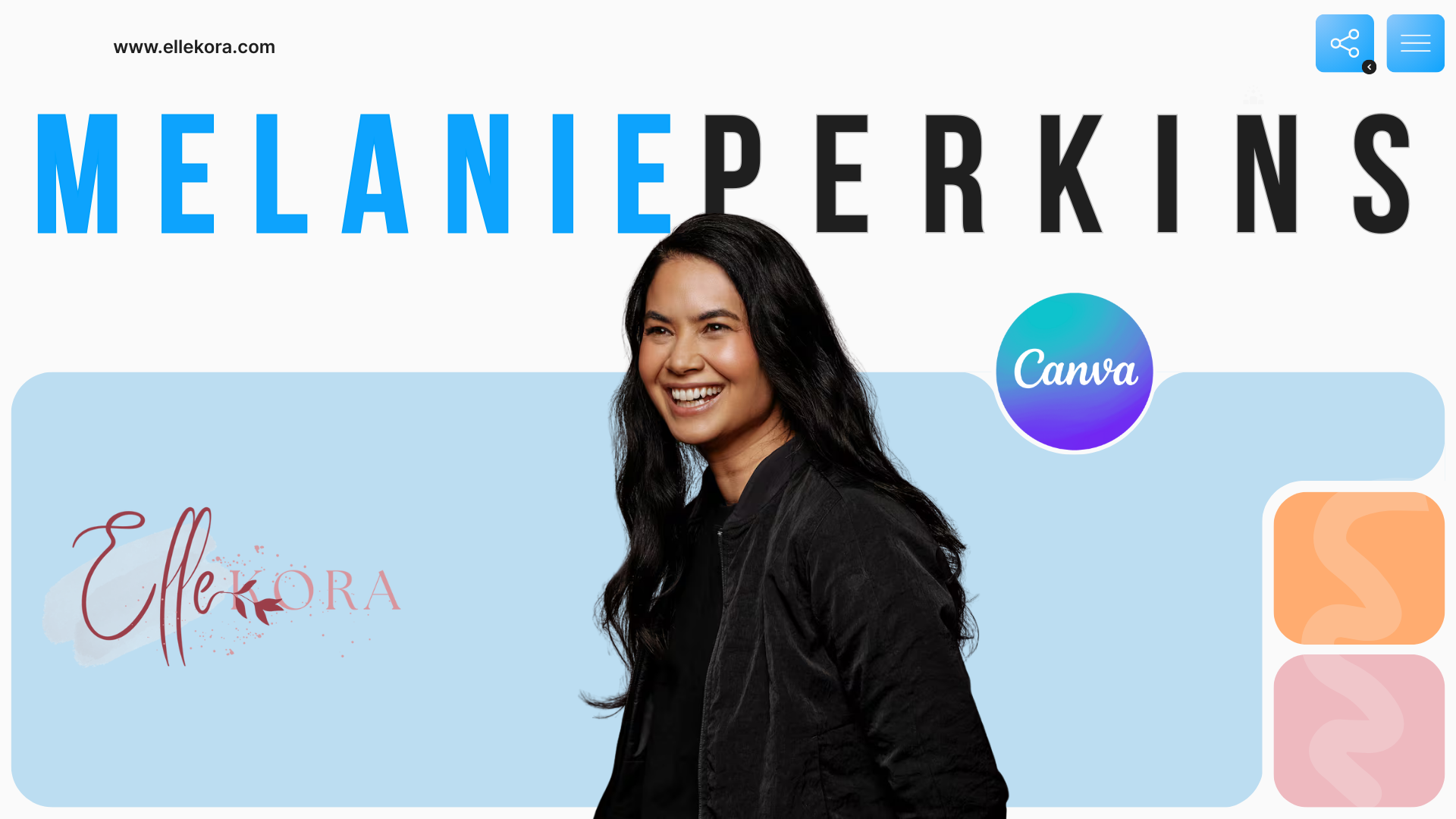
Melanie Perkins: The Quiet Visionary Redesigning How the World Creates
Melanie Perkins spotted the problem when she was just 19 years old, tutoring graphic design students at the University of Western Australia who spent endless hours wrestling with Adobe Photoshop’s confusing menus and buttons instead of actually creating anything beautiful or meaningful. Their frustration ignited a spark in her that would grow into one of the most transformative companies of our time, Canva, a platform now serving over 240 million monthly users worldwide with tools that make professional design accessible to absolutely everyone from teachers crafting classroom posters to entrepreneurs building stunning brand visuals. Born in Perth in 1987 to a teacher mother and an engineer father blending Australian, Malaysian, Filipino, and Sri Lankan roots, Perkins absorbed discipline early through 4:30 a.m. figure skating sessions that taught her the power of relentless pursuit and goal setting long before she ever touched a keyboard for business. By age 14 she already ran her first venture selling handmade scarves at local markets to support charities, discovering that spotting needs, crafting solutions, and connecting with customers could fuel both purpose and profit in equal measure. Today at 38, with an estimated net worth of 5.8 billion dollars placing her among Australia’s richest and the world’s youngest self-made female tech billionaires, she leads a design empire valued in the tens of billions that has fundamentally reshaped how the world communicates visually, proving that true innovation blooms from empathy and simplicity rather than complexity and exclusion.

Roots of Relentless Innovation
Perkins pursued Communications Psychology and Commerce at university, blending human insight with business savvy in a way that perfectly primed her for what came next, while her tutoring gig revealed the massive gap between elite design software built for experts and the everyday creators who deserved better tools without the steep learning curve. She launched Fusion Books in 2007 as her first real test, a platform letting students design custom yearbooks online that quickly expanded to schools across Australia, France, and New Zealand, validating her core belief that simplifying creation unlocks widespread participation and joy. Yet yearbooks were merely the opening act; her true vision stretched far broader, envisioning a universal design tool as intuitive as typing a document, a dream she pitched to over 100 investors who all turned her down, questioning everything from her location in distant Perth to the very idea that non-designers needed such power. Each no sharpened her resolve, forcing refinements to her pitch and deeper clarity on the mission until finally in 2012 she and her co-founder husband Cliff Obrecht secured Australian backing to bring Canva to life the next year with its drag-and-drop magic, thousands of templates embedding pro-level principles like perfect typography and color harmony so users could shine without years of training. The freemium approach welcomed everyone in for free while premium features rewarded those scaling up, creating a flywheel of adoption that turned frustrated amateurs into confident creators overnight.
Canva didn’t mimic existing tools; it reinvented them from the ground up, prioritizing ease so profoundly that growth exploded organically as users shared their triumphs across social feeds and workplaces, drawing in 240 million monthly actives, 27 million paying customers, and nearly 3.3 billion dollars in annual revenue by 2025 while expanding into over 100 languages from bustling Tokyo streets to vibrant Mexico City markets. Acquisitions like Pixabay for stock images, Pexels for photos, and Flourish for data viz supercharged the ecosystem, turning Canva into a one-stop creative powerhouse that powers social posts, corporate decks, wedding invites, and marketing masterpieces with effortless grace. Perkins obsessed over every user touchpoint, stripping away bloat to ensure each click delighted rather than daunted, fostering a movement where small business owners craft logos rivaling agency work, nonprofits spin compelling stories on shoestring budgets, and teachers transform bland handouts into engaging visuals that captivate young minds. This user-first ethos created not just a product but a cultural shift, redistributing creative equity so widely that even giants like Adobe adapted by softening their own interfaces and pricing to stay relevant in Canva’s radiant shadow.
Ultimate Strategy
Perkins took Canva public in 2021, joining the elite circle of female founders guiding their visions through IPO triumphs while steadfastly shunning the spotlight’s ego trap that ensnares so many tech leaders, always crediting her team’s brilliance over solo heroics in a refreshingly grounded style that resonates deeply. Her leadership mantra revolves around service and upliftment, weaving principles like being a good human, empowering others, and simplifying complexity into Canva’s DNA so thoroughly that as the workforce ballooned globally these values scaled seamlessly, binding thousands across continents in shared purpose that boosts innovation and retention far beyond industry norms.
Employees thrive in this environment, channeling genuine passion into features that serve real lives, from AI magic that suggests layouts to collaborative canvases where teams co-create in real time across time zones. Philanthropy flows naturally from this ethos too; Perkins pledges the bulk of her fortune to tackle global challenges, viewing wealth as a tool for amplified impact rather than personal trophy, inspiring fellow tech trailblazers to blend profit with profound purpose in ways that redefine success itself. Her influence ripples outward as a beacon for women entrepreneurs everywhere, especially in Australia where she shattered ceilings by proving world-class companies spring from anywhere with the right vision, persistence trumping pedigree every time as she solved underserved needs to unlock massive markets others overlooked.
Canva’s culture celebrates humanity amid hypergrowth, with rituals and practices ensuring no one feels lost in the scale, from transparent all-hands to flexible work that honors life beyond desks, yielding products that feel alive because the people building them are. Perkins draws from her skating days for endurance, her scarf-selling youth for customer intuition, and tutoring roots for empathy, crafting a leadership mosaic where every piece elevates the whole, turning Canva into more than software, into a living testament that when you empower creators universally, you unleash creativity’s infinite potential across humanity.
A Legacy That Designs the Future
The Perkins story transcends balance sheets and user stats to illuminate a brighter path for innovation where accessibility fuels dominance, simplicity sparks delight, and collective empowerment generates enduring value that outshines solitary conquests. From dorm-room frustration to global phenomenon, she challenged sacred cows like why design demanded expertise gates, why software hoarded power among pros, why tech growth required soul sacrifice, answering through Canva’s intuitive brilliance that welcomes all aboard the creative train. Her trajectory inspires countless dreamers, showing young founders in far-flung places that proximity to power centers matters less than proximity to real problems, that rejection refines rather than repels, that building for the many crafts larger legacies than battling for elite scraps.
As Canva evolves with AI copilots that anticipate needs and enterprise suites rivaling bespoke agencies, Perkins stays true to origins, ensuring every advance makes creation more inclusive, more joyful, more human at core. Philanthropic horizons expand her canvas too, channeling billions toward education, equality, and empowerment initiatives that echo Canva’s democratizing spirit on societal scales, proving business acumen and benevolence harmonize beautifully when guided by unwavering principles. She redefines the female entrepreneur archetype not through flash but through foundational impact, her quiet confidence commanding respect as peers and protégés alike adopt her user-obsessed, values-driven blueprint for sustainable triumph. In boardrooms and classrooms worldwide, Canva templates bear her invisible signature, each polished graphic a nod to the tutor who once dreamed aloud that everyone deserves to design without barriers, a vision now reality shaping how billions express ideas daily. The journey continues with fresh horizons like immersive visuals and collaborative worlds, all rooted in that original empathy, ensuring Melanie Perkins’ revolution paints ever brighter futures where creativity flows freely to all who dare to dream it.